
An employee assistance program is one of the most valuable — yet underused — workplace benefits available today. Many employees hear the term EAP during onboarding, but few truly understand what it offers, how it works, or when they should use it.
In reality, a well-structured EAP program can play a critical role in improving employee wellbeing, reducing stress-related productivity loss, and supporting both personal and professional challenges.
This guide explains an employee assistance program, its purpose, coverage, benefits, and exactly how employee assistance programs work in real-world situations.
What Is An Employee Assistance Program?
An employee assistance program is an employer-sponsored support service that provides confidential, short-term assistance to employees facing personal, emotional, or work-related difficulties. These challenges may impact mental health, job performance, or overall wellbeing.
Most EAP programs are delivered by third-party providers and include access to counseling, assessments, referrals, and practical resources — often at no cost to the employee.
According to the U.S. Department of Labor, employee assistance programs are designed to help employees resolve problems that may adversely affect their work performance.
What Does Employee Assistance Program Do?
A common question employees ask is: what does an employee assistance program do beyond therapy?
In practice, EAP services extend well beyond counseling. A typical employee assistance program may support employees with:
- Emotional stress and burnout
- Anxiety, depression, and mental health concerns
- Relationship or family issues
- Financial stress and budgeting guidance
- Legal information and referrals
- Workplace conflict or harassment concerns
- Crisis support after traumatic events
The role of EAP is early intervention — helping employees address issues before they escalate into long-term problems.
Purpose of Employee Assistance Program
The purpose of an employee assistance program is to support employees as whole individuals, not just workers.
Employees don’t leave personal challenges at the door when they clock in. Stress at home, financial pressure, or emotional difficulties inevitably affect focus, decision-making, and engagement at work.
EAP programs exist to:
- Provide confidential support
- Reduce absenteeism and presenteeism
- Encourage early help-seeking
- Improve overall workplace wellbeing
Goal of Employee Assistance Program
The goal of an employee assistance program is not to replace long-term medical or psychological treatment. Instead, its goal is to:
- Stabilize issues early
- Provide short-term, solution-focused support
- Connect employees with appropriate long-term resources when needed
From an employer perspective, the goal is also to maintain productivity while demonstrating genuine care for employees.
How Does Employee Assistance Program Work?
Understanding how does an employee assistance program work helps employees feel confident using it.
Most EAP programs follow a simple process:
Step 1: Access
Employees contact the EAP provider directly via phone, website, or mobile app. HR does not schedule appointments.
Step 2: Assessment
A trained professional conducts an intake to understand the concern and determine the best type of support.
Step 3: Short-Term Support
Employees may receive a set number of counseling or consultation sessions focused on resolving the issue.
Step 4: Referrals
If longer-term or specialized care is needed, the EAP provides referrals to external providers.
This structured approach makes EAP easy to access during stressful times.
EAP Services Explained
Typical EAP services may include:
- Short-term counseling (virtual or in-person)
- Mental health assessments
- Stress and resilience coaching
- Work-life balance support
- Financial and legal consultations
- Crisis intervention services
- Manager consultation resources
The Society for Human Resource Management highlights EAPs as a key component of comprehensive employee wellbeing strategies.
EAP Benefits for Employees and Employers
The EAP benefits are significant for both sides of the employment relationship.
For Employees:
- Confidential, judgment-free support
- Faster access to professional help
- Reduced stress and emotional overload
- Guidance during difficult life events
For Employers:
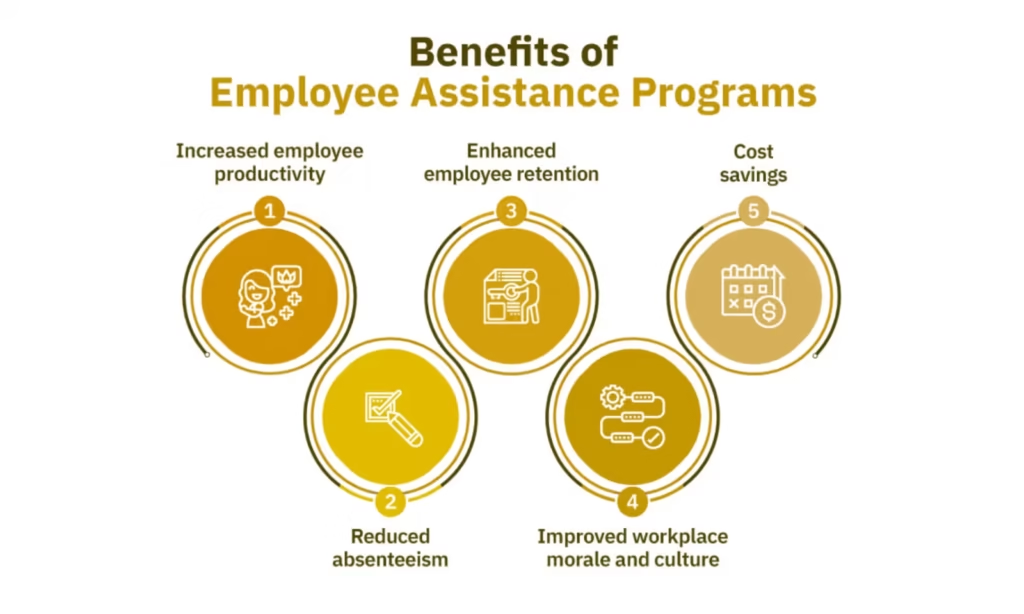
- Reduced absenteeism
- Improved productivity
- Lower turnover risk
- Stronger employer brand
The World Health Organization notes that mental health support at work improves productivity and reduces economic losses.
What Is Employee Assistance Program Coverage?
Many people ask: what is employee assistance program coverage?
Coverage varies by provider and employer, but commonly includes:
- A fixed number of sessions per issue per year
- Access for employees and sometimes household members
- Support across multiple life and work challenges
EAP is typically a short-term support system, not a replacement for ongoing treatment.
Is Employee Assistance Program Confidential?
Yes — is employee assistance program confidential is one of the most important concerns.
Reputable EAP programs operate under strict confidentiality rules:
- Employers do not receive personal details
- HR does not access session notes
- Only anonymized usage statistics may be shared
Exceptions are rare and usually involve immediate safety risks.
Why Are EAP Programs Important?
So, why are EAP programs important today?
Because modern workplaces are high-pressure environments. Rising stress levels, burnout, and mental health challenges directly impact performance and retention. EAPs provide a proactive solution that benefits both people and organizations.
What Is the Main Aim of an Employee Assistance Program?
The main aim is to help employees manage personal and work-related challenges early, confidentially, and effectively.
What Is the Primary Focus of the EAP?
The primary focus of the EAP is short-term intervention, guidance, and referral — helping employees regain stability and clarity.
Final Thoughts
An employee assistance program is not just a benefit — it’s a strategic support system. When employees understand what it offers and feel safe using it, EAP becomes a powerful tool for wellbeing, performance, and retention.