Running a small business means wearing multiple hats. You manage operations, clients, finances, and—whether you want to or not—people’s stress. When even one employee struggles emotionally or mentally, the impact is amplified in a small team.
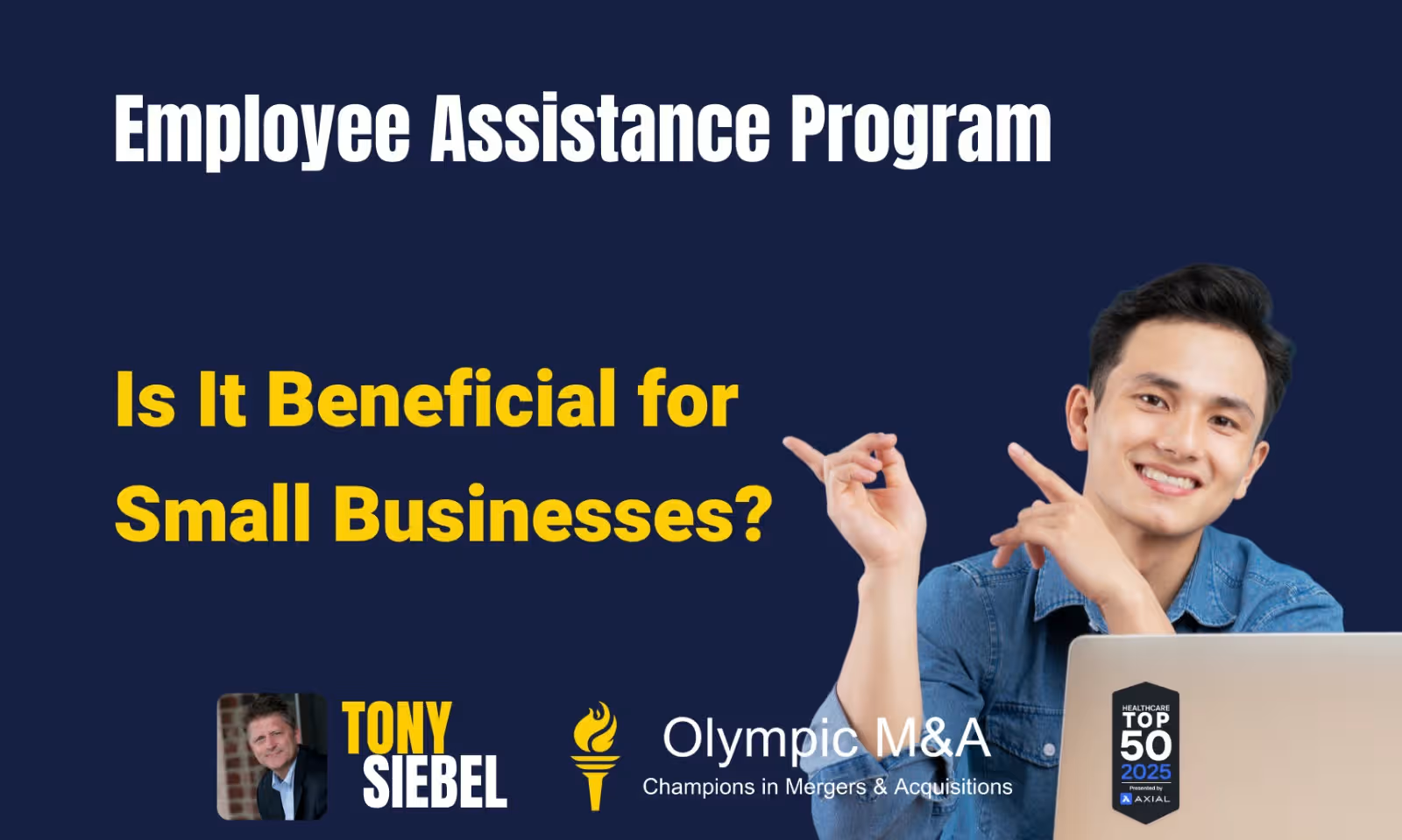
That’s why more owners are asking whether an employee assistance program for small business is a smart investment or just another cost. The short answer: when implemented correctly, EAP can be one of the most cost-effective wellbeing tools a small business can offer.
This guide explains how EAP works for small teams, how it supports stress and mental health, and answers the key question: is an employee assistance program worth it?
What Is an Employee Assistance Program for Small Business?
An employee assistance program for small business is a confidential support service that gives employees access to professional help for personal and work-related challenges.
Unlike enterprise-level programs, small business EAPs are usually:
- More flexible in pricing
- Easier to implement
- Delivered primarily through phone and virtual counseling
- Designed for limited or no HR infrastructure
Despite the size difference, the core purpose remains the same: support employee wellbeing before problems escalate.
EAP for Employees: What Your Team Actually Gets
When you provide EAP for employees, you’re not offering therapy “forever.” You’re giving them early access to guidance and support.
A typical EAP program for employees includes:
- Confidential short-term counseling
- Emotional and stress management support
- Referrals to mental health professionals if needed
- Practical tools for work-life balance
For employees, the value lies in fast access and confidentiality—not long-term treatment.

Employee Assistance Program for Stress in Small Teams
Stress hits harder in small businesses. Tight deadlines, overlapping roles, and limited backup mean pressure builds quickly. That’s where an employee assistance program for stress becomes especially valuable.
EAP stress support may include:
- Coping strategies for workload pressure
- Burnout prevention techniques
- Sleep and anxiety management tools
- Communication strategies during high-stress periods
Even a few focused sessions can significantly reduce stress-related performance issues.
Employee Assistance Program for Mental Health
Mental health is no longer a “personal issue” that stays outside work. Anxiety, depression, and emotional exhaustion directly affect productivity, engagement, and retention.
An employee assistance program for mental health provides:
- Early intervention before conditions worsen
- A safe, confidential place to talk
- Support without stigma or workplace exposure
According to the World Health Organization, depression and anxiety cost the global economy over $1 trillion annually in lost productivity.
For small businesses, preventing even one burnout-related resignation can justify the cost of EAP.
How Does EAP Work for Mental Health?
A common question is how does an EAP work for mental health in practice?
Here’s a realistic scenario:
- An employee notices rising anxiety and difficulty concentrating
- They contact the EAP directly (phone or portal)
- A professional assesses the situation
- The employee receives short-term counseling sessions
- If needed, they’re referred to long-term care providers
The key advantage is speed. Employees don’t have to navigate the system alone while already overwhelmed.
Is An Employee Assistance Program Worth It for Small Business?
For most small businesses, yes—because the alternative is more expensive.
Consider the cost of:
- Replacing an employee
- Training new hires
- Lost productivity during stress-related absenteeism
- Conflict escalation and morale damage
An EAP is typically priced per employee per month and often costs far less than one lost hire per year.
The Society for Human Resource Management confirms that EAPs help reduce absenteeism and improve employee performance.
What Are EAP Requirements?
Small businesses don’t need complex systems to implement EAP.
Basic requirements include:
- Selecting an EAP provider
- Defining employee eligibility
- Communicating access details clearly
- Training managers on appropriate referrals
There’s no requirement to track usage or manage sessions internally—that’s handled by the provider.
What Is the EAP Process?
Most programs follow a simple structure:
- Employee accesses the EAP provider
- Intake assessment is completed
- Short-term support is provided
- Referrals are offered if needed
- Anonymous usage data may be reported to the employer
The employer’s role is awareness—not oversight.
What Are the Steps of an EAP?
From a business perspective:
- Choose the right provider
- Introduce EAP during onboarding
- Normalize usage through leadership messaging
- Remind employees regularly
- Encourage early use, not crisis-only use
Consistency is more important than complexity.
How Small Business Owners Should Position an EAP
One common mistake is treating an EAP like a hidden benefit. Instead, position it as:
- A professional support resource
- A tool for stress, mental health, and life challenges
- A confidential service with no career risk
Clear messaging builds trust—and trust drives usage.
EAP and Retention in Small Businesses
Employees don’t expect small businesses to match enterprise benefits. But they do value genuine support. Offering an EAP signals that:
- You care about wellbeing
- You understand real-life challenges
- You’re invested in long-term relationships
This can significantly improve loyalty and reduce turnover.
When Small Businesses Benefit Most from An EAP
An EAP is especially useful during:
- Rapid growth phases
- High seasonal workloads
- Organizational changes
- Post-crisis recovery
- High customer-facing stress roles
Using an EAP proactively prevents reactive damage control later.
Final Verdict: Is An EAP Worth It for Small Business?
For most small businesses, an employee assistance program for small business is not just worth it—it’s strategic. It protects your people, your culture, and your bottom line without requiring heavy management.
When employees feel supported, they perform better. And when they perform better, small businesses thrive.